I WANT TO PALLETIZE AUTOMATICALLY
Robotic palletizing for industrial production lines
We design the solution around your real production requirement, not around a generic palletizer. The goal is not a theoretical maximum speed. It is a stable cycle, correct stacking and safe operation, every day.
What decides the right solution
- Line rate — how many pieces per minute, and so how many seconds the robot has for each cycle.
- Weight and dimensions of the product — together with the gripper they must fit within the robot payload.
- Pallet and pattern — pallet type, layers, final height.
- Space and routes — how many pallet positions fit and how the product arrives.
- Environment — humidity, cleaning, dust.
- Safety — how people move around the unit.
That is why we have 3 solutions
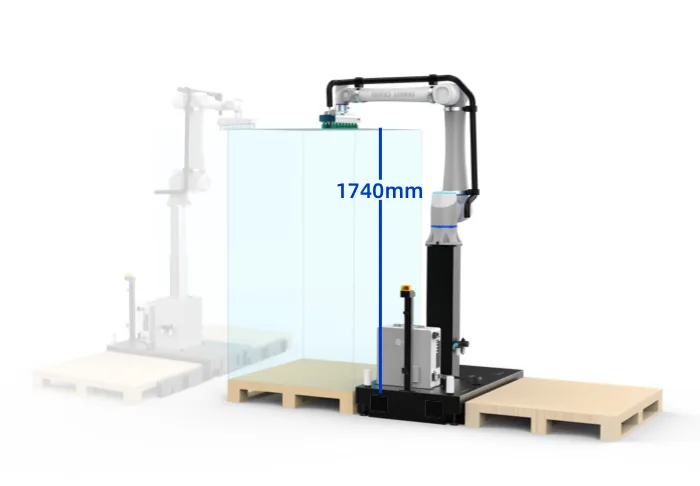
1. Palletizing cobot, up to 20 kg
What it is: A robot unit at the end of the line, with a gripper adapted to your own product and palletizing software for patterns and recipes for each product code.
When it fits: When the product together with the gripper does not exceed 20 kg and your rate gives the robot enough time per cycle. We confirm this time with a real sample.
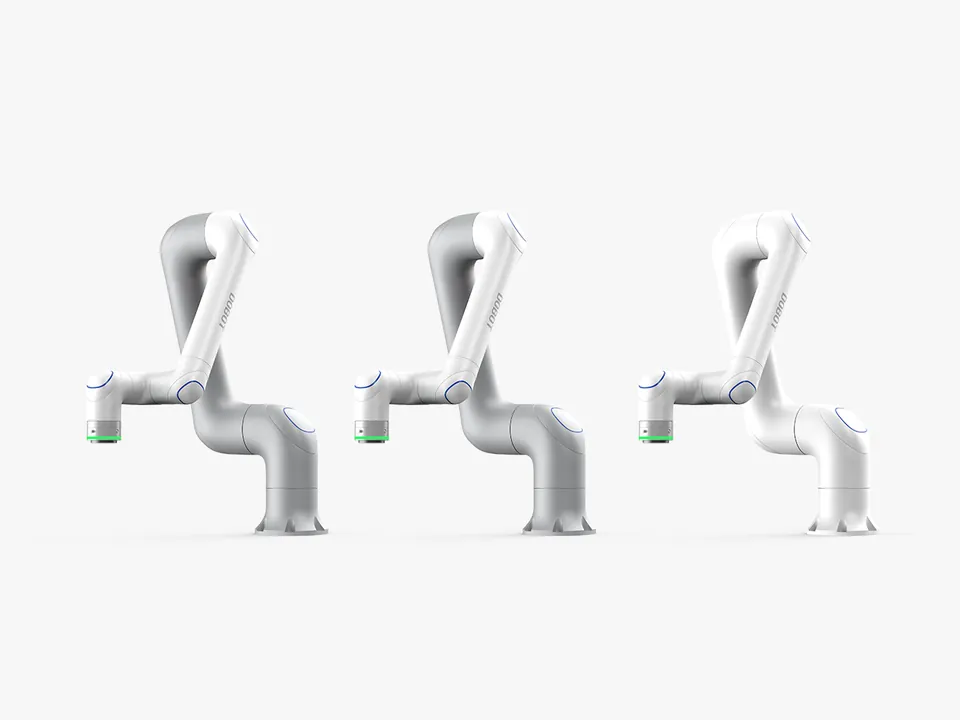
Equipment: DOBOT CR20A (total payload 20 kg, reach 1,700 mm).
2. High-payload cobot, up to 30 kg
What it is: A high-payload collaborative robot, for cases that exceed the limits of a lighter cobot and for pallets with a greater final height.
When it fits: When the product together with the gripper exceeds 20 kg, up to 30 kg, or when you want room for heavier product codes in the future.
Equipment: DOBOT CR30H (payload 30 kg, reach 1,800 mm, up to 10 pieces per minute, according to the manufacturer).
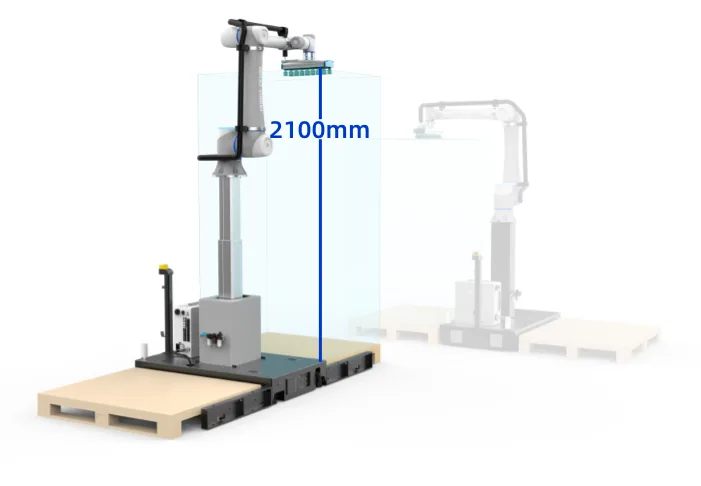
2. One robot, two pallet positions
What it is: The robot fills one pallet while the other is being changed, so the line does not stop.
When it fits: When production runs continuously and a pallet change must not interrupt it.
Equipment: DOBOT CR20A on a metal base, with PLC, product detection sensors and safety interlocks.
3. Palletizing in a wet or demanding environment
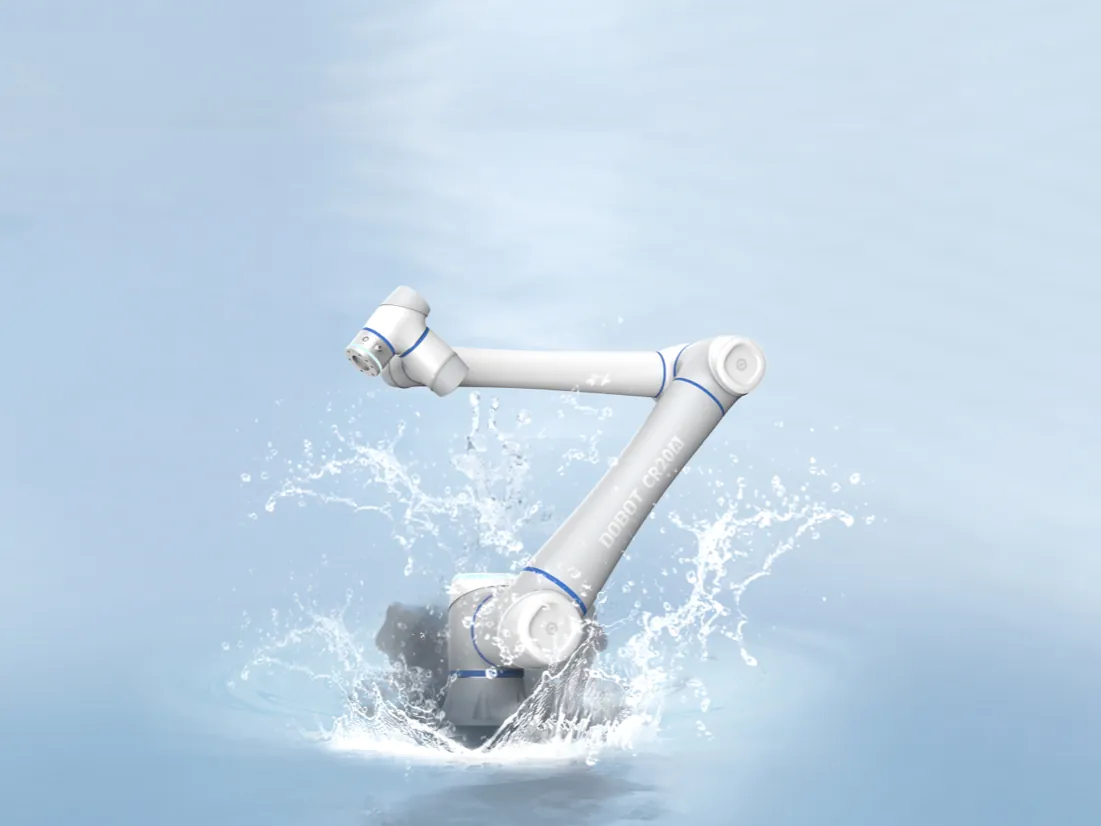
What it is: A collaborative robot with IP68 protection for areas with humidity or frequent cleaning.
When it fits: Food, beverages, fish, washdown areas.
Equipment: DOBOT CRA-IP68.
Which solution fits you
| Your case | The solution |
|---|---|
| Product with gripper up to 20 kg | 1 · DOBOT CR20A |
| Product with gripper from 20 to 30 kg, or a tall pallet | 2 · DOBOT CR30H |
| The line must not stop at pallet change | 3 · Two pallet positions |
| Humidity or frequent washing | 4 · DOBOT CRA-IP68 |
If your product is heavier or your rate is higher than a cobot can handle, we will tell you from the first discussion.
Not sure which one fits you? Tell us your application. Request a technical discussion
How it works
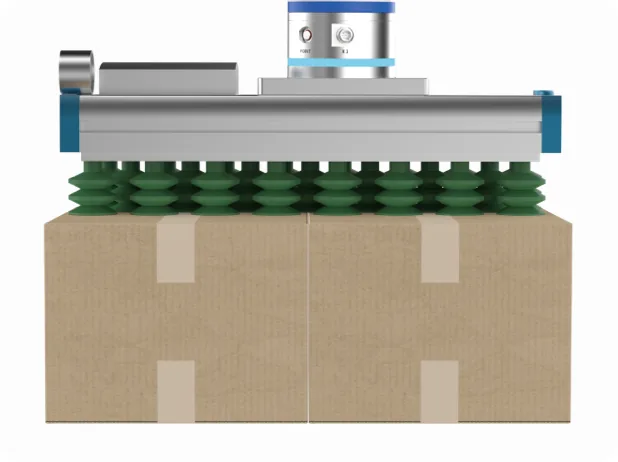
Gripper with a double vacuum cup
Steady hold of the case and higher performance, according to the manufacturer.
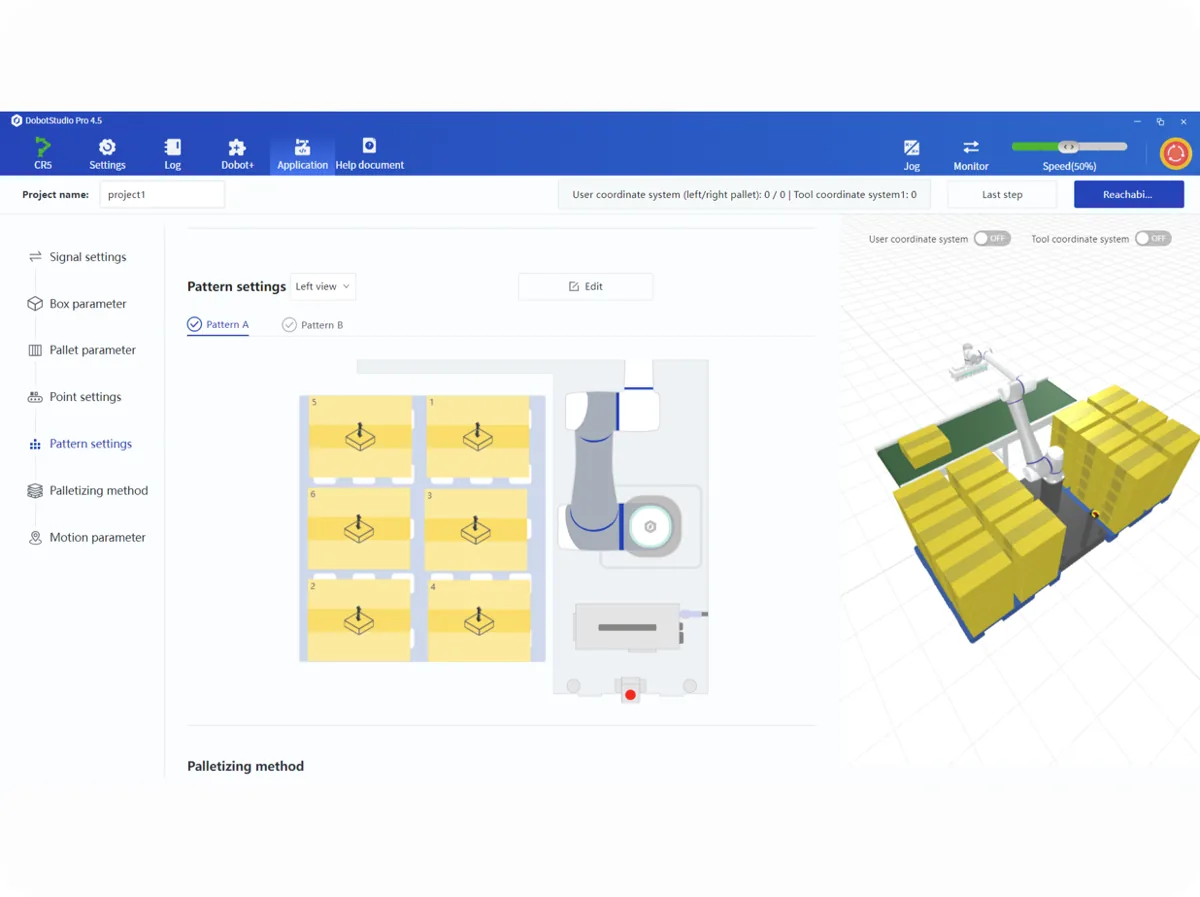
Setup from the screen, with a 3D view
You define the pallet, case and layout without programming, and you see the result before the robot starts.
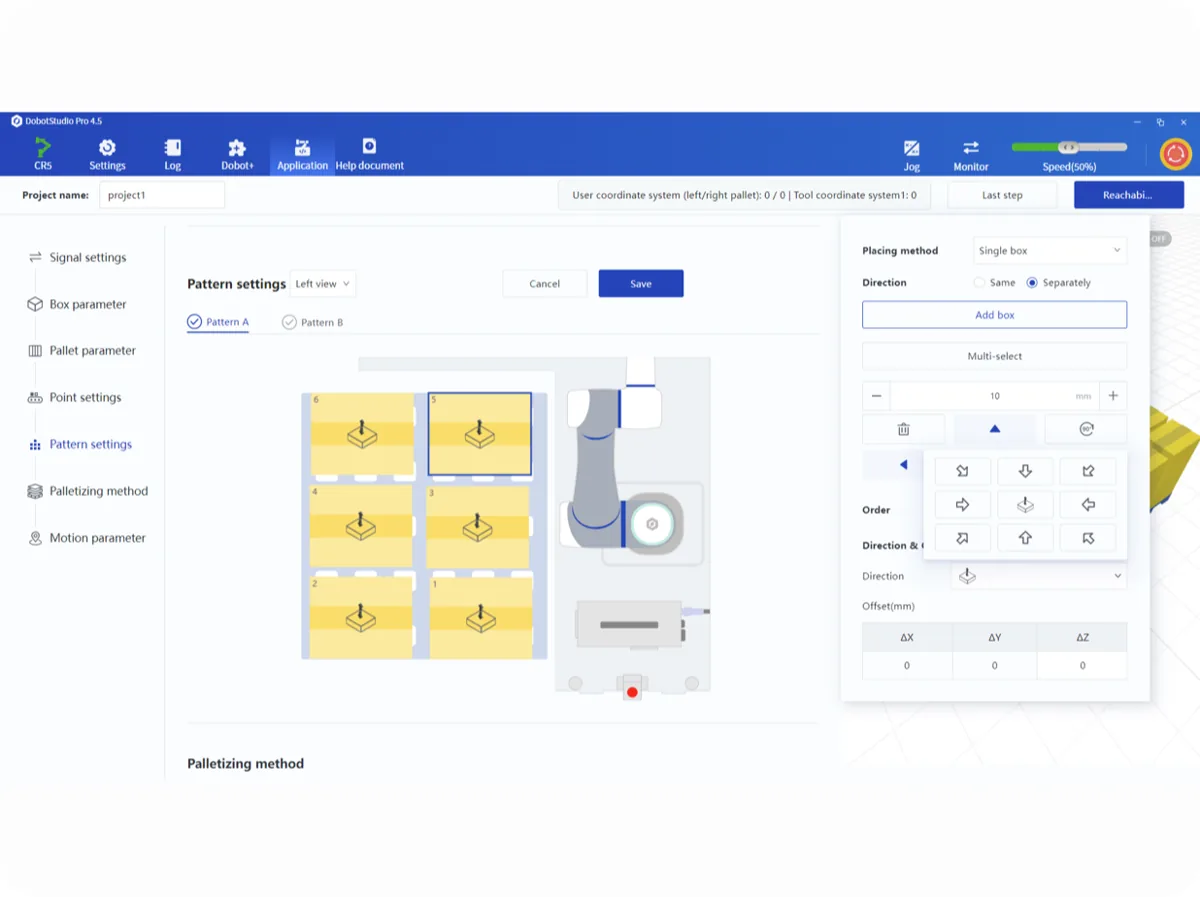
Patterns per product code
Each stacking pattern is saved as a recipe; you change product code without setting up the unit again.
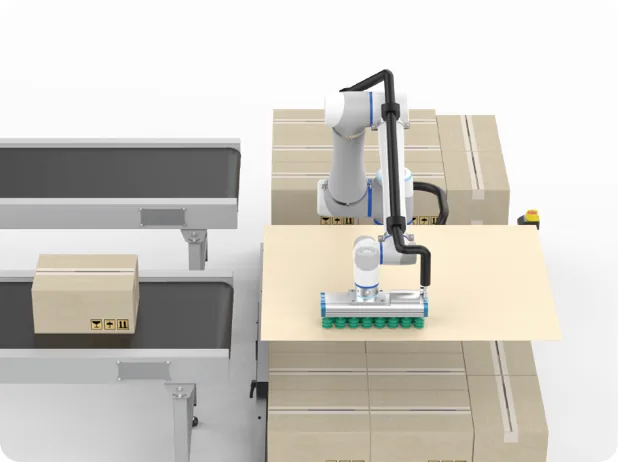
Sheets between layers
The robot also places a slip sheet between the layers, where your product requires it.
How we work: from measurement to delivery
- Site visit — space, conveyor, pallets.
- Product data — weight, dimensions, product codes.
- Gripper test — safe hold of the real product.
- Simulation — reach, pallet pattern, cycle time.
- Final proposal — clear scope, safety, commissioning. The price offer matches the real installation exactly.
- FAT — a functional test at our premises, before delivery.
- SAT — final acceptance at your site, and training of your team.
Safety measures are not "assumed": they come from the risk assessment of the specific installation. After delivery, support and service are done by us.
Application example
Palletizing cartons at the end of the line
The cases arrive on the conveyor. The cobot takes them one by one and stacks them on the pallet with the pattern you have set for each product code. With two pallet positions, while one fills you change the other, and the line does not stop.
When the product changes, you change the recipe from the screen. With a new gripper, the same investment palletizes other packs as well.
In operation: palletizing wine cases with a DOBOT CR20A at a winery (manufacturer video).
To propose a solution, we need
- Weight and dimensions of the product
- Pieces per minute
- Pallet type and wanted height/pattern
- Photos or a sketch of the end of the line
Frequently asked questions
What weight can it lift?
The DOBOT CR20A lifts up to 20 kg and the DOBOT CR30H up to 30 kg, in total, that is the product together with the gripper, according to the manufacturer. For cases of 7 to 14 kg, for example, we usually suggest the CR30H, to leave room for the gripper. For heavier products we study another layout with you.
How many cases per hour does it palletize?
It depends on the weight, the route and the pattern. We measure the rate with your own sample, before we commit to a number.
Is a fence needed around the robot?
It depends on the layout. The answer comes from the risk assessment of the installation, and from it we choose a safety scanner, a light curtain or a fence.
What if the product or the pattern changes?
The palletizing software saves patterns and recipes for each product code, with a 3D preview before execution. We train you to add new product codes yourself.
How fast does it pay for itself?
We calculate it together, with your own production figures — not in general terms.
Does it connect to our ERP or WMS?
Yes, where needed, through a PLC and additional inputs/outputs.
The same cobot can also do…
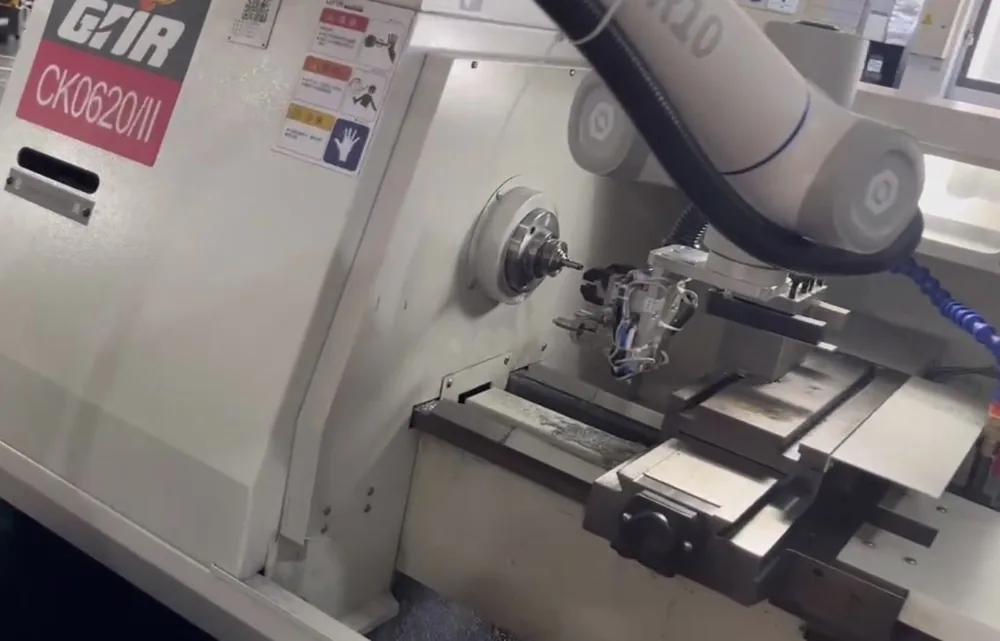
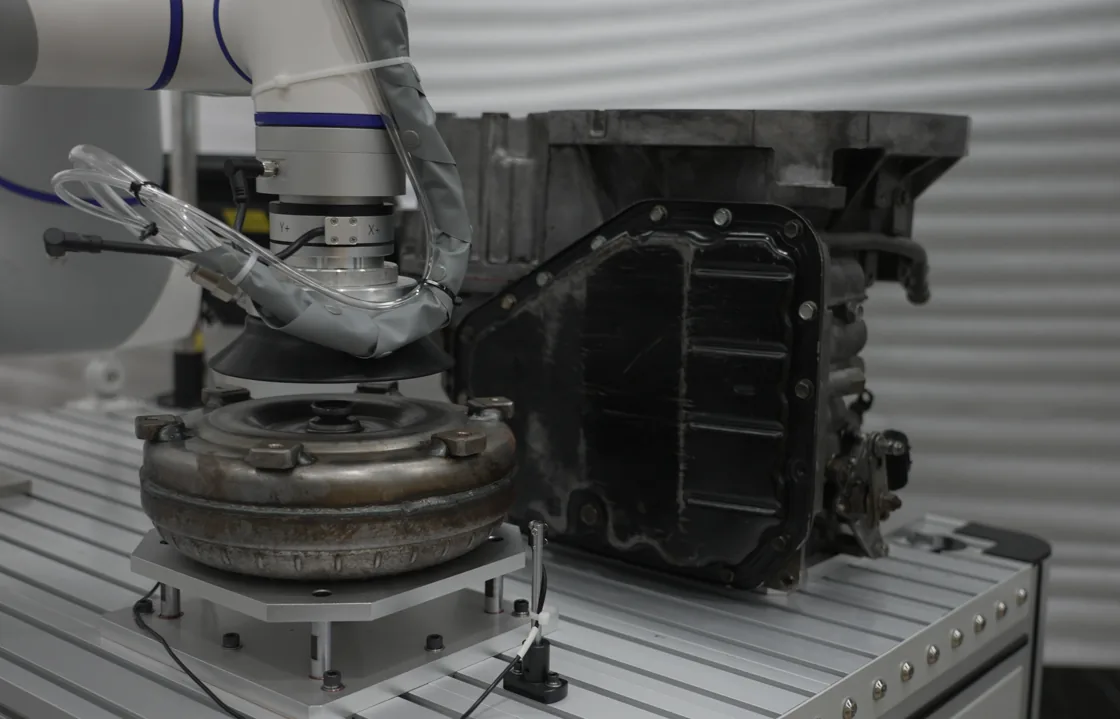
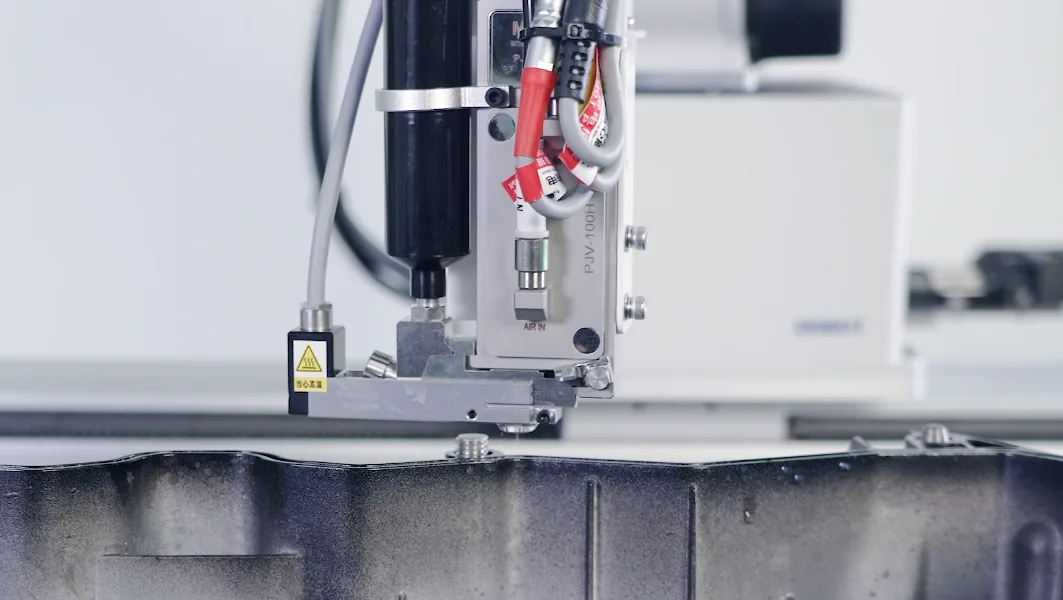
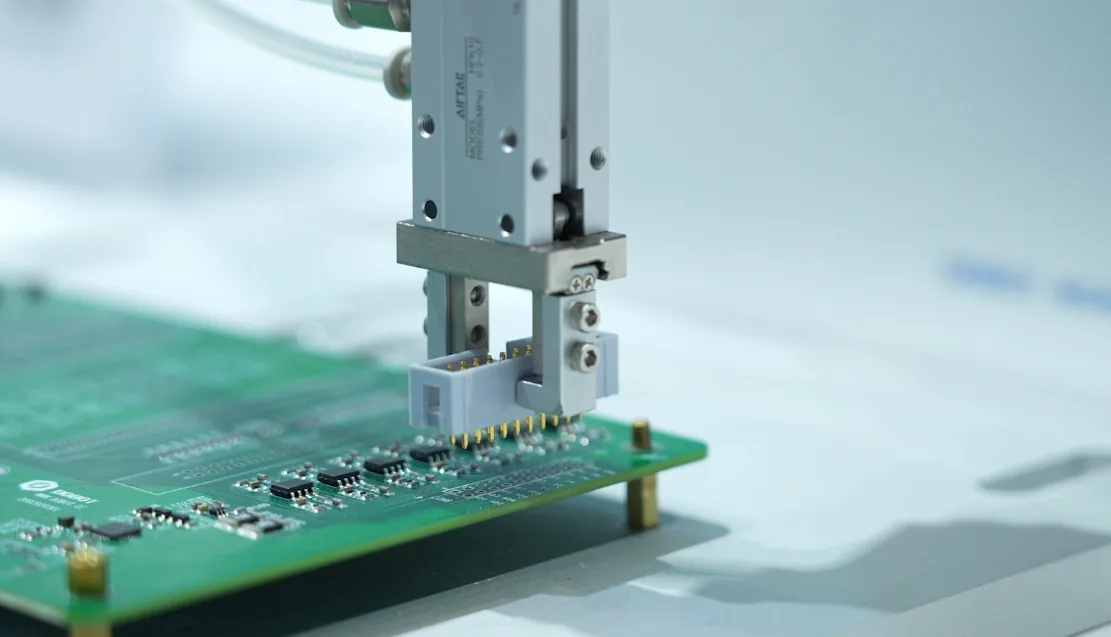
A collaborative robot is not tied to one task. With another tool and program, it takes over other repetitive jobs in your production.
Did you know you can also…
Tell us what you want to palletize
One of our engineers will reply with a first estimate for your own line.