I WANT TO CHECK QUALITY WITH A CAMERA
Visual quality inspection with a camera on the production line
The camera checks every item, not a sample at the end of the shift. It sees if the cap is missing, if the label is crooked, if the expiry date was printed correctly — and it takes the error off the line before it reaches your customer.
What decides the right solution
- What you check — presence, position, code, text, dimension or volume.
- Line rate — how many pieces per minute pass in front of the camera.
- Light and environment — reflections, glossy surfaces, dust, humidity.
- What happens with the error — automatic rejection, a signal to the operator or a line stop.
- Where the information goes — only to the line, or also recorded in a PLC, ERP or database.
For this we have 4 solutions
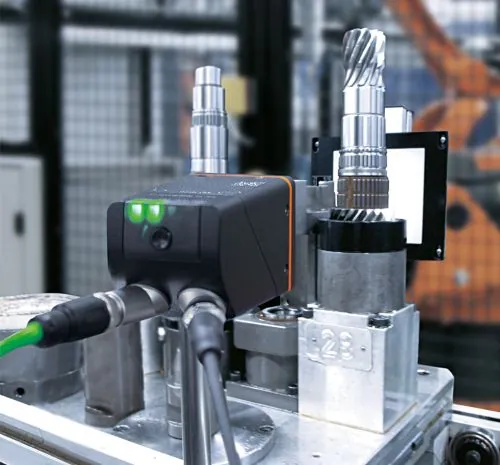
1. Presence and completeness check
What it is: A camera that compares every item with a correct sample that you have shown it.
When it fits: When you want to know if the cap, the label, the part or the gasket is there, and if it is in the right position.
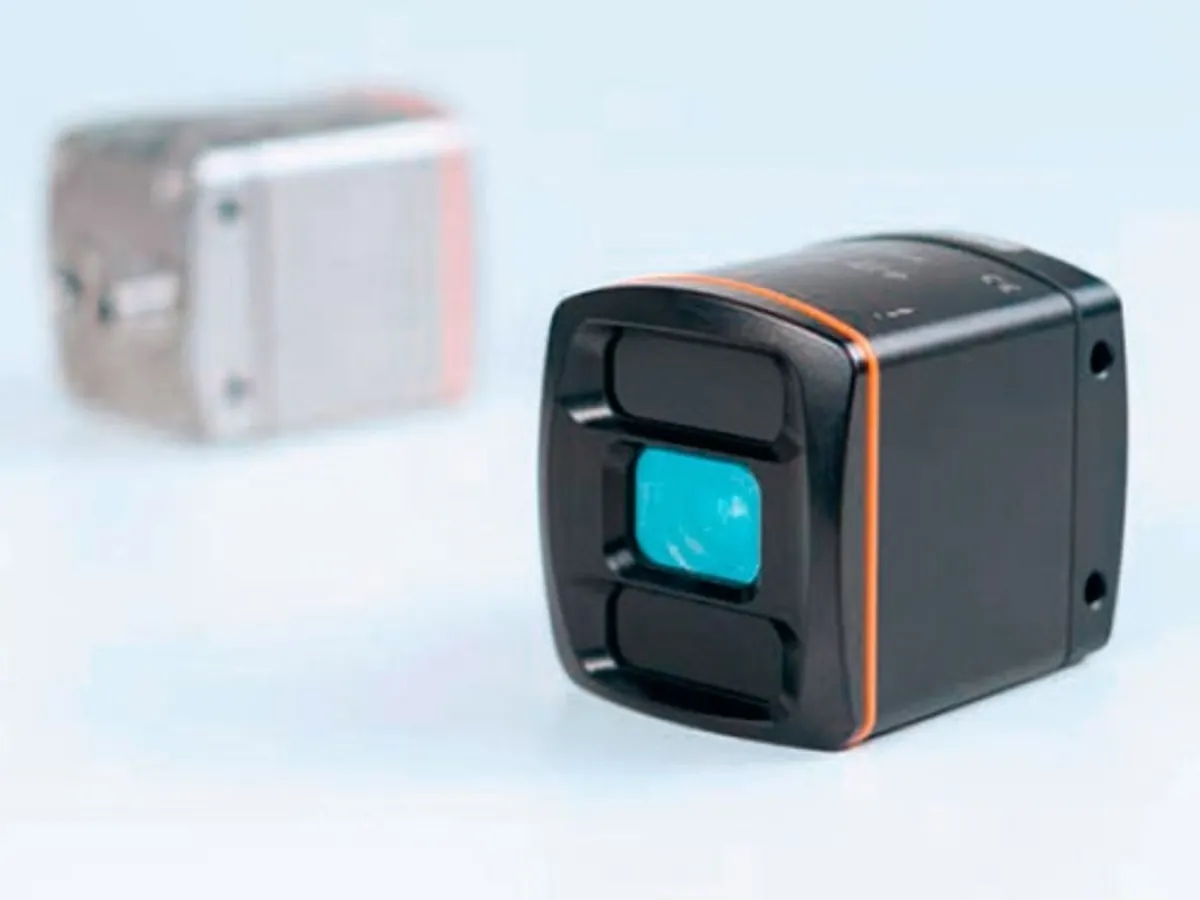
Equipment: ifm O2D5.
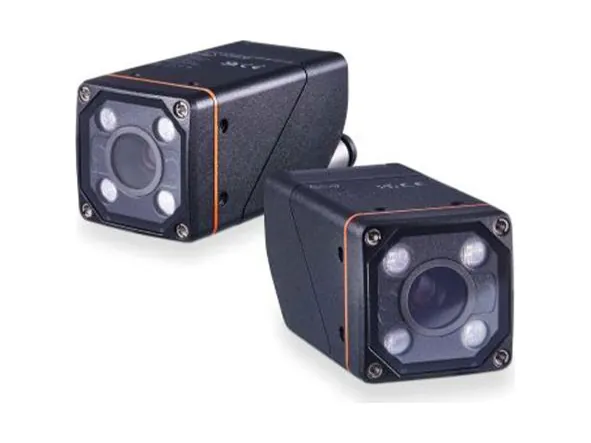
2. Reading and checking codes and text
What it is: A camera that reads barcodes, QR codes and DataMatrix, and also printed text (OCR), and checks that they are correct and readable.
When it fits: When you must be sure that the LOT, the expiry date and the code are correct on every pack — or when you want traceability for each item.
Equipment: ifm O2I5 or ifm O2U, which combines code reading and quality checking in the same device.
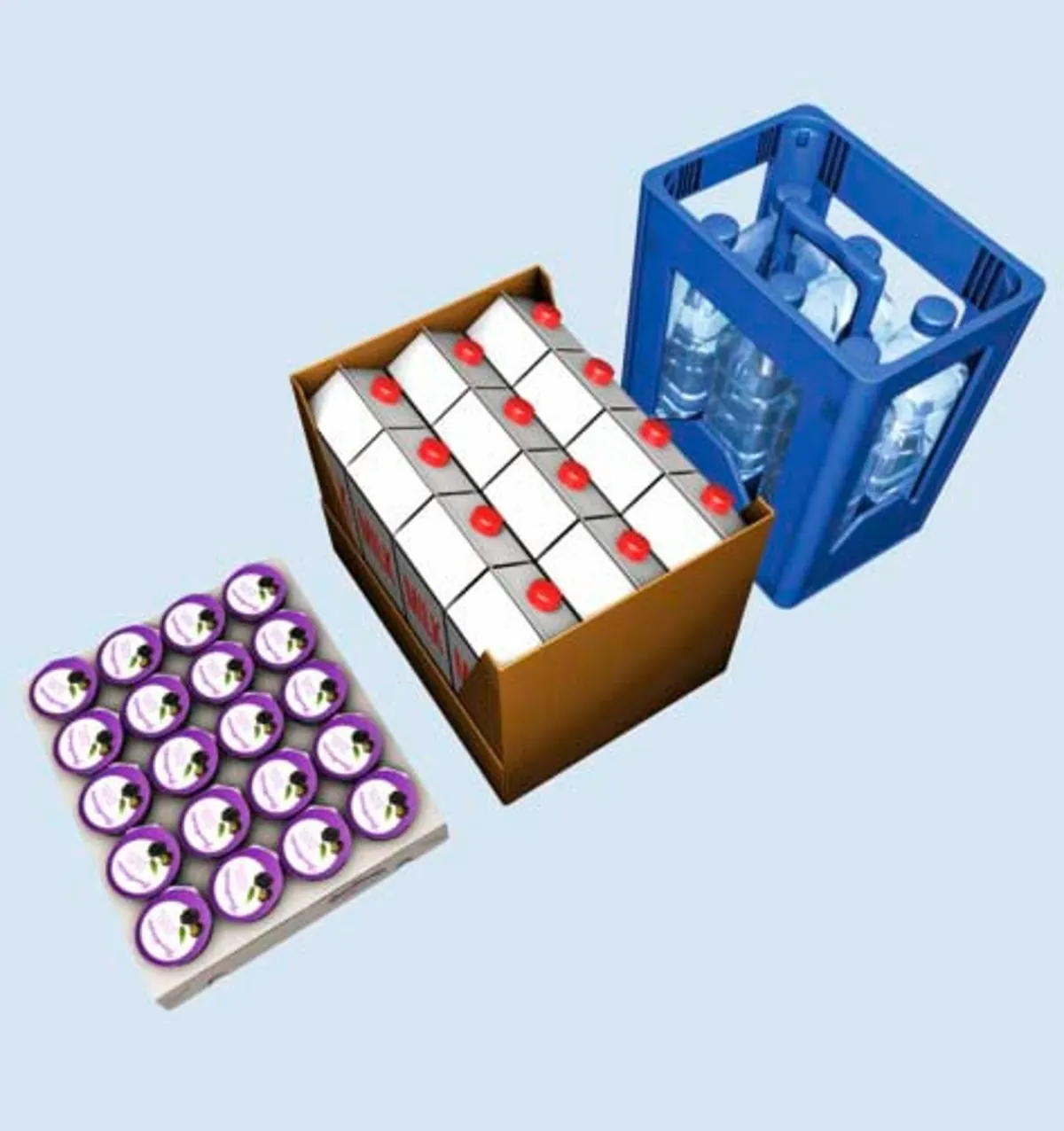
3. 3D inspection: completeness, dimensions, level
What it is: A camera that sees in depth. It measures height, volume and whether something is missing inside a case.
When it fits: When you want to check that the case is full before it closes, to measure parcel dimensions or the level in containers.
Equipment: ifm O3D, with ready-made applications for case completeness, dimensions and level, according to the manufacturer.
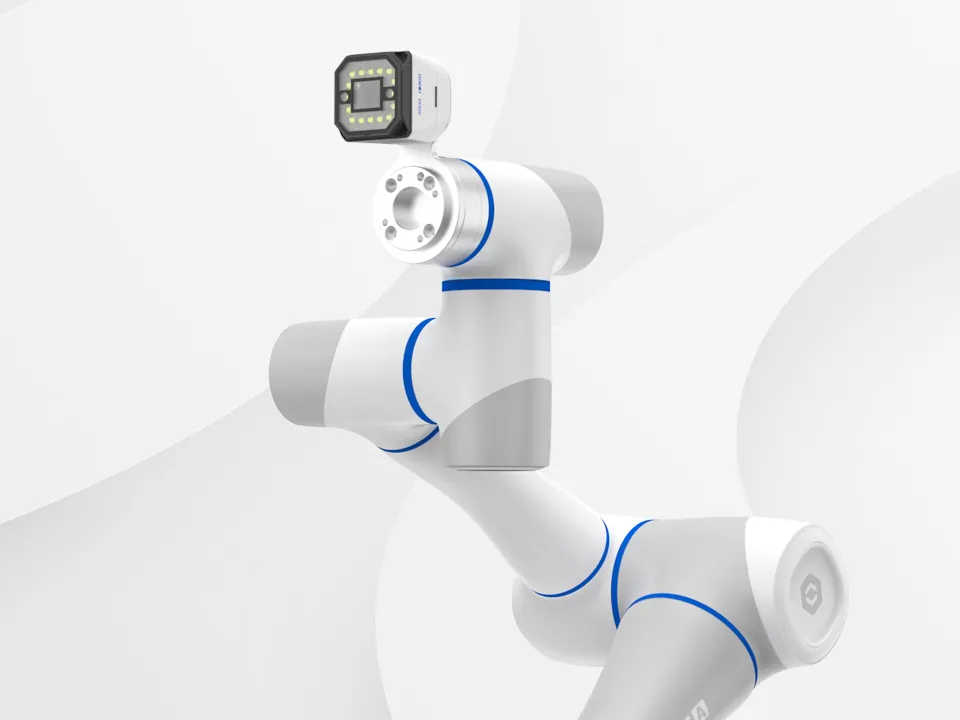
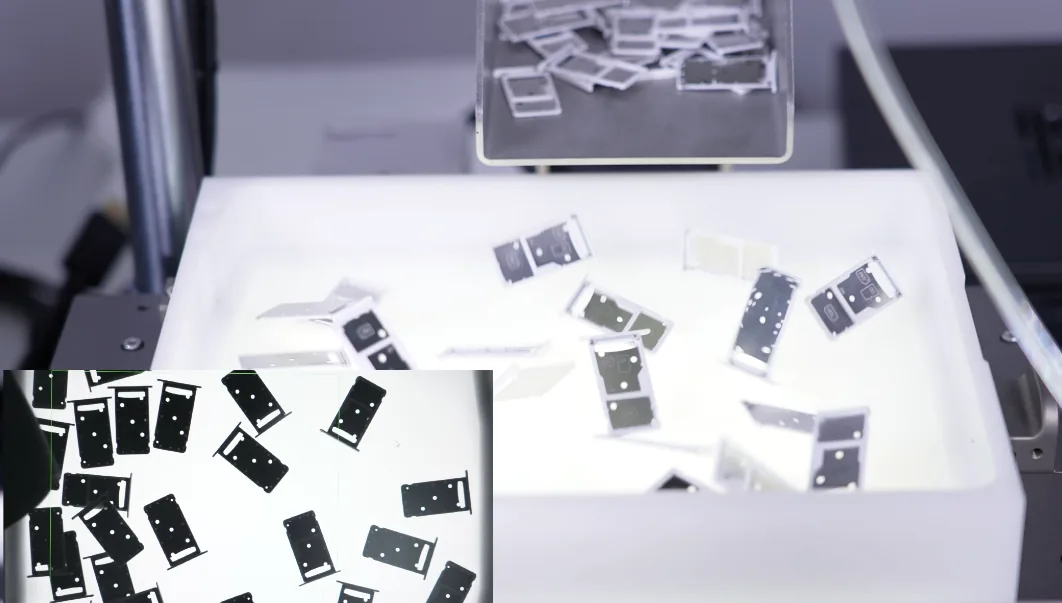
4. "Eyes" for the robot
What it is: A camera that finds the position and orientation of the item and sends them to the robot.
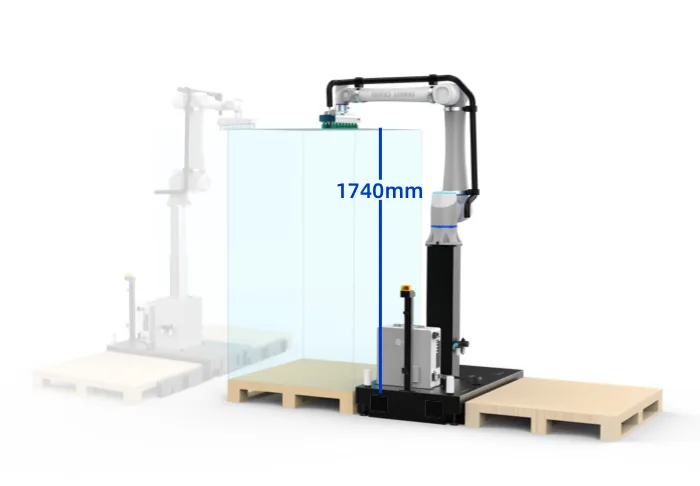
When it fits: When items do not always arrive in the same position and the cobot must find them to pick them up — for example bin picking or depalletizing.
Equipment: DOBOT VX500 or ifm O2U with robot–camera calibration.
Which solution fits you
| You want to check | The solution |
|---|---|
| If something is there and correctly placed (cap, label, part) | 1 · Presence and completeness |
| If the code, LOT or expiry date are correct and readable | 2 · Codes and text |
| If the case is full, what dimensions or level it has | 3 · 3D inspection |
| Where the item is, so a robot can pick it | 4 · "Eyes" for the robot |
If you want to detect very small surface defects (scratches, micro-cracks), this needs a special study of lighting and optics — we will tell you from the first discussion.
Not sure which one fits you? Tell us what you want to check. Request a technical discussion
How it works
- You show what is correct. You show the camera a correct item; this becomes the reference.
- Setup without programming. Setup is done on a screen, with the manufacturer's software, with no programming skills.
- A decision on every item. Good or bad, on the line, without stopping the flow.
- Connection to the line. The result goes to a PLC, a rejection mechanism or a recording system (TCP/IP, PROFINET, EtherNet/IP, IO-Link, according to the manufacturer).
How we work: from discussion to the line
- Discussion — you tell us what you want checked, with photos of good and bad items.
- Proposal — camera, lighting, rejection and connection, with a clear scope.
- Visit — light, mounting position, line rate.
- Test on samples — when the project moves forward, we check that the camera reliably tells good from bad.
- Installation and training — on your line, with your team.
- Service — support and changes when your products change.
Application example
Checking that the expiry date was printed correctly
The printer prints LOT and expiry date on every pack. Right after, the camera reads the text and compares it with what should have been printed. If it is missing, blurred or wrong, the pack is rejected and the operator is alerted.
This way, a cartridge running out or a wrong setting does not become a batch recall. And you have a record that every item was checked.
In three steps, on the line
1 · Print — the printer prints LOT and expiry date.
2 · Read — the camera reads and compares.
3 · Decide — good continues, bad is rejected.
To propose a solution, we need
- Photos of good and bad items
- Exactly what you want checked
- Pieces per minute
- A photo of the point on the line where the camera will go
- What should happen when an error is found
Frequently asked questions
Do I need to know programming?
No. Setup is done on a screen; we train you to add new products yourself.
What about the lighting of the area?
Lighting is the most critical point. We check it in the test and, where needed, we add dedicated lighting or filters to the camera.
Does it reject bad items by itself?
The camera gives the signal; the rejection is done by a mechanism (for example air or an arm) that we propose and install together.
Does it connect to our PLC or ERP?
Yes. The result of every check can go to the line PLC and be recorded.
Can it check many products on the same line?
Yes. Each product is saved as a separate setting; you change product from the screen.
How fast does it check?
It depends on the check and the line. We confirm the rate with your own samples, before we commit.
The camera works together with…
Visual inspection gives the most value when it is connected to the other machines on your line.
Did you know…
- …the same camera can read the code and at the same time check that the label is straight?
- …a 3D camera can measure the dimensions of a parcel without stopping it?
Tell us what you want to check
We will suggest the camera and the setup that fit your line.